SERVICE / 02 / KEEPS WATCH关注

It watches
all day.
It updates
every day.
一天看到晚
一天比一天

By day it records what happens here. At night it reads the record back: which of it is habit, which is coincidence. Only what holds up changes its mind. You write no rules for any of this. 白天它记下这里发生的事,夜里从头过一遍:哪些是习惯、哪些是巧合,分清楚了才更新。规则一条都不用你写。
RECORD · LEARN · PROPOSE · FEEDBACK记录 · 学习 · 建议 · 反馈
Yesterday, as it recorded it昨天,它记下的
YOU SAID你交代的 2 requests2 句
SCHEDULED RUNS定时任务 3 completed跑了 3 次
DEVICE EVENTS设备动静 doors, lights, climate门 · 灯 · 冷暖
OVERNIGHT夜里整理成 3 memory updates3 条记忆更新
BROUGHT TO YOU拿来问你的 1 card1 张卡
A full day of records goes in. What comes out to you is the few things worth a decision. 进去的是一整天的记录,出来找你的,只有值得你拿一次主意的那几件。
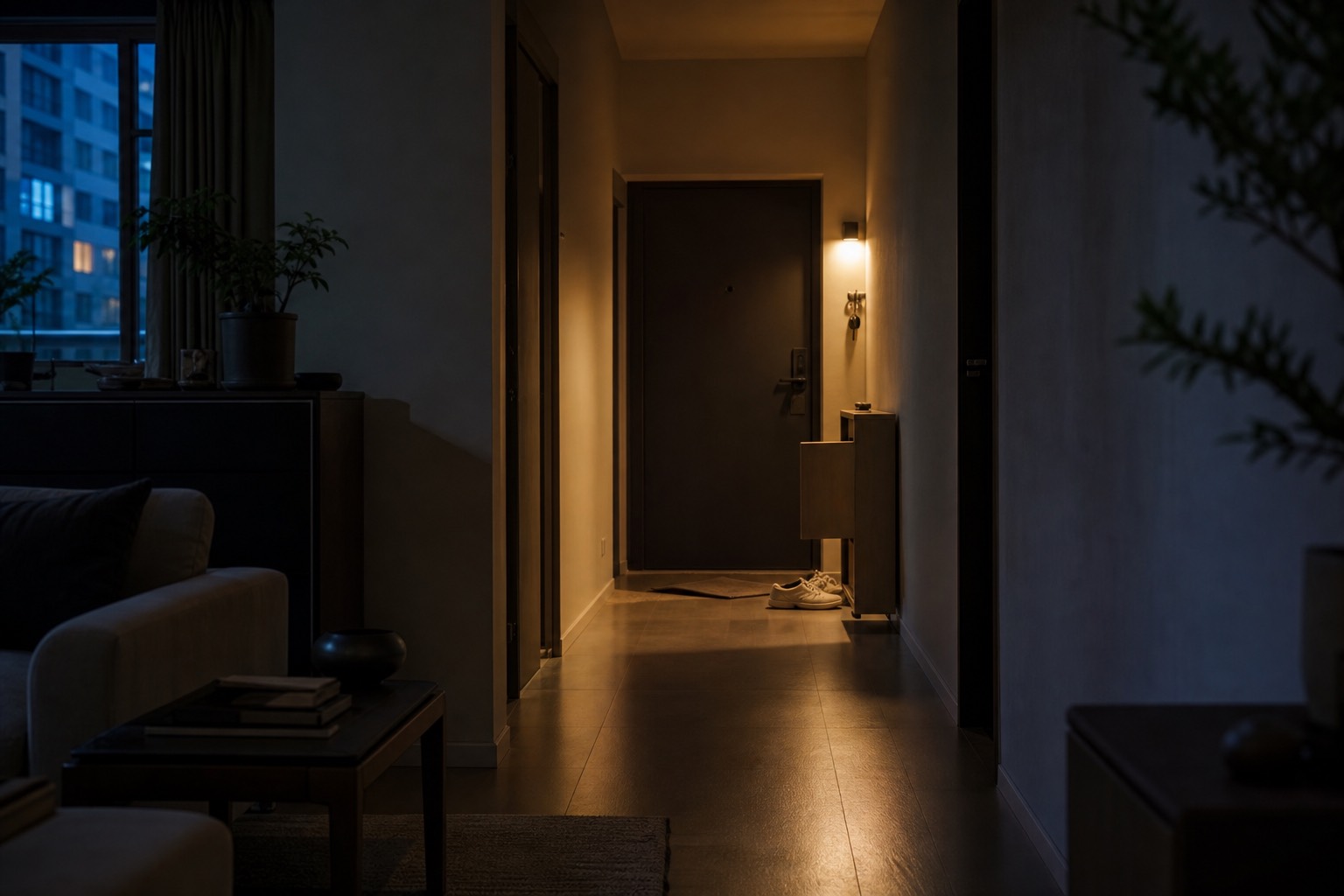
The entryway at night: a wall lamp lit, a pair of sneakers by the door
PREMISE / ZERO HANDWRITTEN RULES0 条手写规则

Rules you write,
or routines it learns?
规则你来写,
还是规律它来?

Automation platforms hand you an editor and wish you luck. Here the division of labor is reversed: going about your day is your job, noticing the routine is its job. 自动化平台把编辑器递给你,剩下靠你自己。这里分工反过来:该干嘛干嘛是你的事,看出规律是它的事。

HANDWRITTEN AUTOMATION手写自动化
You maintain the logic逻辑由你维护
if time == 18:00
and occupancy == true
and season != summer …

Every condition is yours to think of, and yours to fix when life changes. The rule does not notice that it went stale. You do, usually late. 每个条件靠你想到,生活一变还得靠你来修。规则不会发现自己过时了。发现的是你,而且通常晚了。

seenzus
Routines are learned, then proposed规律它学,学到了向你提议
"Most evenings lately, the living-room AC goes on around six. Shall I remind you when it is that time and still off?" 「最近几个傍晚,客厅空调常在六点前后开。以后到点还没开,我来提醒你?」

You write zero rules. It brings the observed routine to you as a question, and nothing becomes standing behavior without your yes. When life changes, it learns the routine over again the same way. 你一条规则都不用写。它把看出来的规律变成一个问题拿给你,你点头之前,什么都不会变成惯例。生活变了,规律照同样的路子重新学。

CYCLE / FIVE STEPS五步闭环

Five steps,
one turn
a day. It gets
more accurate.
五步一圈
一天一转
越转越准

Record, learn, propose, feedback, and the feedback flows back into what it believes. Your verdicts are training data: every yes and no you give makes the next proposal more accurate. 记录、学习、建议、反馈,反馈再回流进它的认识。你的每一次「好」和「不用」都是训练材料,下一次提议因此更准。

EXECUTION ALWAYS WAITS FOR YOUR NOD执行,永远等你点头
ONE NIGHT'S UPDATE一晚的更新
RECORDED BY DAY白天记录到的
  • · Study AC ran 3 afternoons with the room empty书房空调三个下午开着没人
  • · You dimmed the living-room lights twice after 9pm你晚九点后两次调暗客厅灯
  • · Someone was at the door Tuesday afternoon周二下午门口有人来过
CONSOLIDATED OVERNIGHT INTO夜里整理成
  • Proposal: turn the study AC off when the room is empty.提议:书房没人时,空调可以关。
  • Memory update: evenings in the living room run dimmer.记忆更新:傍晚的客厅要暗一点。
  • Noted: Tuesday-afternoon visits are expected here.记下:周二下午有人来,是这里的常态。
The proposal goes to you as a card. The other two just make it better informed. 提议会变成一张卡来问你。另外两条,只是让它更有数。
RECORD记录 LEARN学习 PROPOSE建议 FEEDBACK反馈 FLOWS BACK回流

Behind this cycle run four agents with separate jobs: one chats, one tidies the space file, one wakes on schedule, one learns at night. Up front you only ever face one butler. 这一圈背后是四个各管一摊的 Agent:一个管对话、一个管整理空间档案、一个到点醒来跑任务、一个夜里学习。台前,你永远只面对一个管家。

CRITERIA / WHAT COUNTS AS A ROUTINE凭什么算这里的惯例

Before it calls anything
a routine, five checks.
说这是这里的惯例之前,
先过五道

Learning that proposes actions in your space has to be strict about evidence. These are the checks every candidate routine passes before it ever reaches you. 敢在你的空间里提议动作,证据就得经得起挑。每条规律送到你面前之前,先过这几道。

Real changes only真实变化才算数 Only actual state changes on real devices count. A device dropping offline is not a behavior.只统计设备真实的状态变化;掉线、抖动这类假动静,不算行为。
Recent window only只看最近十四天 Judgments use the last fourteen days of records. Old routines fade out of the evidence instead of haunting it.下判断只用最近十四天的记录;过去的旧规律自然退出证据,不会一直纠缠。
Against the baseline跟平时比才算 "Often" only means something against this space's own normal. What is routine here is measured here.「经常」要跟这个空间自己的平时比才成立;这里的常态,以这里为准。
Coincidence excluded巧合不算数 Two things happening together twice is not a pattern, and it does not double-count repeats to inflate one.两件事凑巧同时发生两次,不叫规律;重复的动静它也不会反复计分,把巧合抬成习惯。
Common sense last常识把关 A statistically neat pattern still gets read against common sense before it is proposed. Numbers alone do not get to run the place.统计上再漂亮的规律,提议之前还要过一遍常识。光凭数字,做不了这里的主。
And when it does reach you, it speaks in plain words, not scores. It will say "most evenings lately", never a percentage of its own confidence. 真到了你面前,它说的也是人话,不是分数。它会说「最近几个傍晚」,不会报一个它对自己判断的把握百分比。
WHAT IT LEARNED, PROPOSED AS A CARD学到的,发卡问你
YOUR CALL请你定夺
Most evenings lately, the living-room AC goes on around six. Remind you when it is that time and still off? 最近几个傍晚,客厅空调常在六点前后开。以后到点还没开,我来提醒你?
Accepting sets up a reminder, not an automatic action. You can undo it any time. 同意后立的是提醒,不是自动执行;随时可撤。
Yes, do that好的 Not now暂不 “Only on weekdays”“工作日再提醒”
EVIDENCE It states what it observed, in words you can dispute.它说清观察到了什么,你能反驳的那种说法。
PROPOSAL One concrete change, and what accepting actually does.一件具体的事,以及同意之后到底会发生什么。
WAYS OUT Accept, decline, or answer in your own words. All three feed back into what it believes.同意、暂不,或用你自己的话回它。三种回答都会回流进它的认识。
ONE TAP · UNDOABLE一键执行 · 可撤销

Accepting a card is one tap, and the action it triggers stays undoable inside a short window. Declining teaches it too: say no and that routine's standing drops at once. 同意就一下,触发的动作在反悔窗内都能撤回。拒绝同样是教它:你说一次「不用」,那条规律的分量立刻降下去。

·Ignored cards expire on their own. Silence is also an answer, and it counts as one.不理的卡会自己过期。沉默也是回答,它照样记作一票。
·One member's no quiets the card for everyone in the space. Nobody gets nagged twice about the same thing.空间里任何一个人说不,这张卡对所有人都安静下来,不会换个人再问一遍。
·Nothing here executes on its own. A proposal is a question until you answer it.这里没有任何东西会自己执行。提议在你回答之前,始终只是个问题。